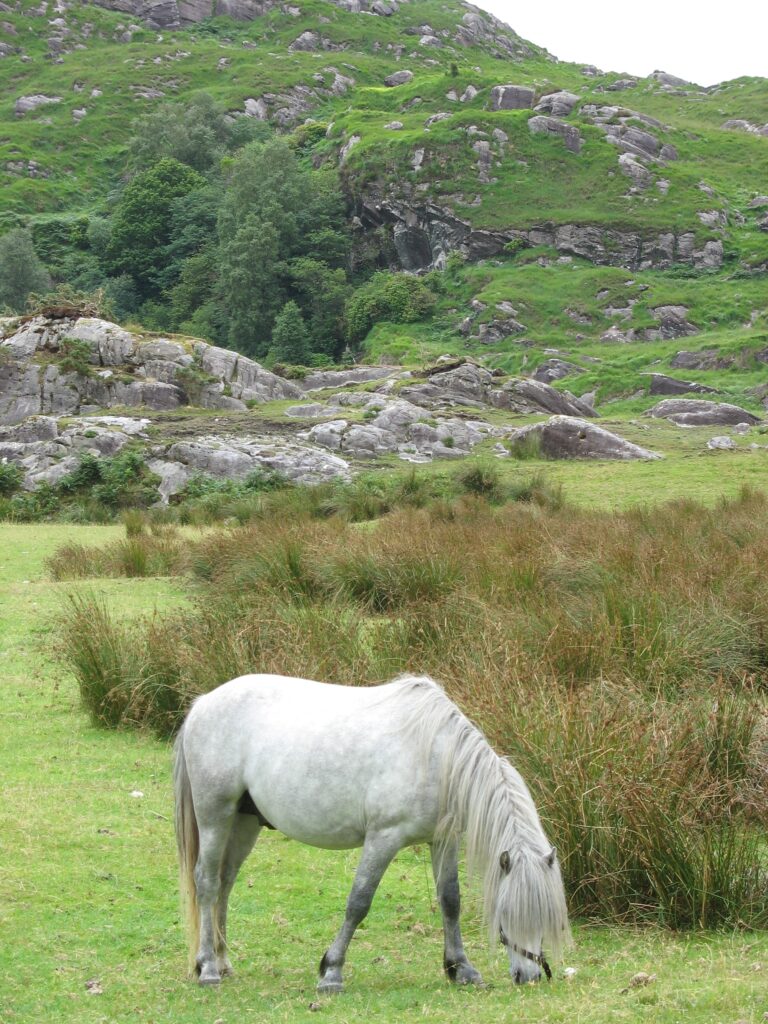
In the windswept peat bogs of County Kerry, where the ground stays perpetually soft, an unlikely equine survivor has defied extinction. The Kerry Bog Pony, standing at roughly 10 to 12 hands high, represents one of Ireland’s most remarkable conservation success stories.
Born of the Bogs
Stand at the edge of a Kerry bog and you’ll understand immediately why larger horses couldn’t thrive there. The ground is spongy, treacherous, and often waterlogged. Where a heavy horse would sink into the peat, the Kerry Bog Pony’s low weight-to-height ratio and distinctive gait allow it to move across bogland with remarkable agility.
Horses matching the description of the Kerry Bog Pony have inhabited Kerry’s peat bogs since at least the 1600s, their ancestry likely stretching back even further. DNA testing in 1995 revealed something remarkable. These weren’t simply rare ponies or forgotten crossbreeds. The Kerry Bog Pony was genetically distinct from every other Irish breed, belonging instead to an ancient European pony lineage more closely related to Shetlands and Icelandic horses. They were survivors of something far older than anyone had realised.
For generations, families depended on the small ponies to haul peat and kelp across landscapes where carts couldn’t go. When not working, they lived semi-feral in the bogland, surviving on sparse vegetation, including heather, moss and possibly seaweed from the shoreline.
The Long Decline
The breed’s troubles began in 1804, when British cavalry forces conscripted many Kerry Bog Ponies as pack animals during the Peninsular War. Sadly, most never returned to Ireland. The Great Famine from 1845 to 1852 delivered another devastating blow as farmers who relied on the ponies either died or emigrated. As peat declined as fuel and mechanisation transformed Irish agriculture, the ponies’ traditional roles evaporated and the population dwindled. with very few animals still known to exist in the traditional Kerry bogland.
The Discovery that Changed Everything
John Mulvihill couldn’t shake a childhood memory. Growing up near the bogs of County Kerry, he remembered small, sturdy ponies that seemed to vanish as Ireland modernised. By 1994, By the late twentieth century the breed was regarded by many as virtually lost, most people assumed they were gone for good. But Mulvihill, who ran the Red Fox Inn at the Kerry Bog Village in Glenbeigh, decided to find out for certain.
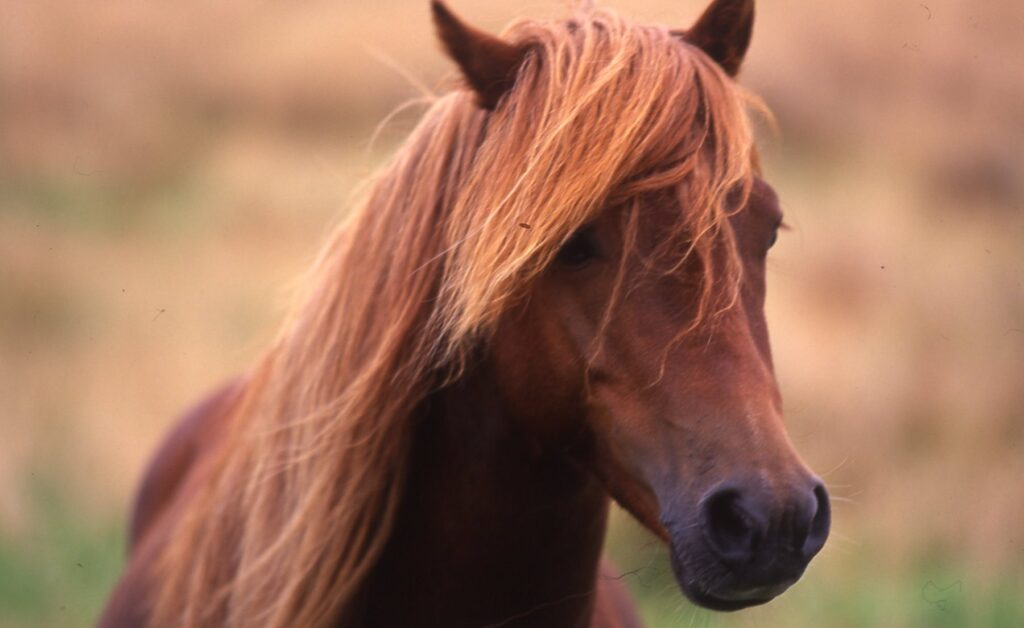
What followed was a determined search across remote corners of Kerry’s landscape. Mulvihill eventually gathered a small group of ponies that matched the traditional type, forming the nucleus of what would become the foundation stock for the revival effort. The Bogman, highlighting how close the breed had come to disappearing forever. Bogman was mated to Purple Heather to produce, a chestnut stallion named Flashy Fox, who became an unlikely hero Between 1995 and 2012 he also sired more than 140 foals. Without The Bogman and Flashy Fox, there would be no Kerry Bog Ponies today.
Back from the Edge
Mulvihill’s 1994 discovery sparked an extraordinary rescue effort. The Irish Government formally recognised the Kerry Bog Pony as Ireland’s Heritage Pony. The Kerry Bog Pony Co-operative Society established a studbook, and numbers began slowly climbing. Under the stewardship of committee members, recent figures from the breed’s studbook indicate steady growth, with several hundred ponies now registered and a consistent number of foals entered each year. Although numbers have improved significantly, the overall population remains small enough to require careful genetic management.
New Purpose
The Kerry Bog Ponies have discovered new relevance in modern Ireland. Their calm temperament and manageable size make them favourites in Pony Clubs and therapeutic riding centres. Their grazing behaviour and ability to move across soft ground have made them useful in certain conservation and land management programmes, particularly in sensitive wetland habitats. Families also keep them as companions, while their strength suits them perfectly for light driving work.
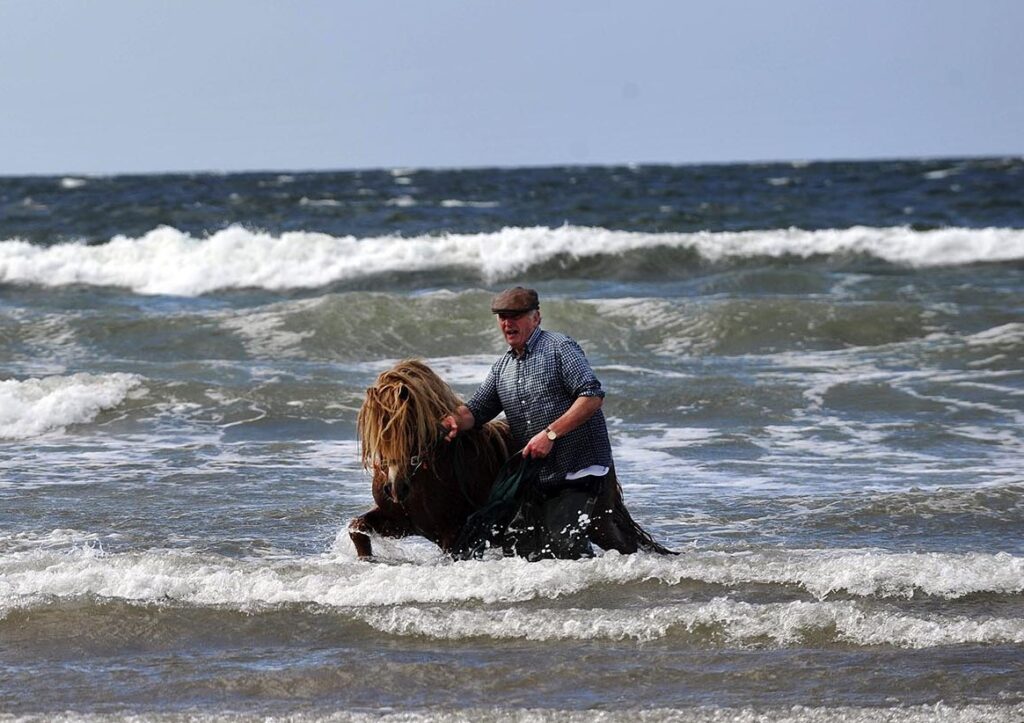
The physical traits that allowed them to survive in the bogs also serve them well today. They have intelligent heads with kind eyes, compact bodies and clean legs. Their long, flowing manes naturally part on either side of the neck to deflect rain. The breed appears in a range of solid colours, including bay, chestnut, black, grey and various dilute shades, and their dense winter coats provide crucial protection against the Irish winter.
What It Means For The Future
The Kerry Bog Pony’s rescue offers lessons that extend far beyond one breed. It demonstrates that extinction need not be inevitable, that dedicated communities can reverse seemingly irreversible declines.
The next generation of Kerry Bog Ponies graze in fields across Ireland, the United States and Great Britain. Each one descends from Flashy Fox and the small group of mares Mulvihill found three decades ago. A single person’s childhood memory prevented a genetic line thousands of years old from vanishing forever. It is this that makes the Kerry Bog Pony more than Ireland’s smallest native breed. It makes them a symbol of what’s possible when we decide something is worth saving.
Learn More
The Kerry Bog Pony Co-operative Society maintains the official studbook for the breed and works to preserve the genetic health of the population through careful breeding management. For those interested in learning more about the breed or supporting conservation efforts, the society welcomes enquiries.
Kerry Bog Pony Co-operative Society
Website: www.kerrybogpony.ie
Email: info@kerrybogpony.ie